Description
Overview
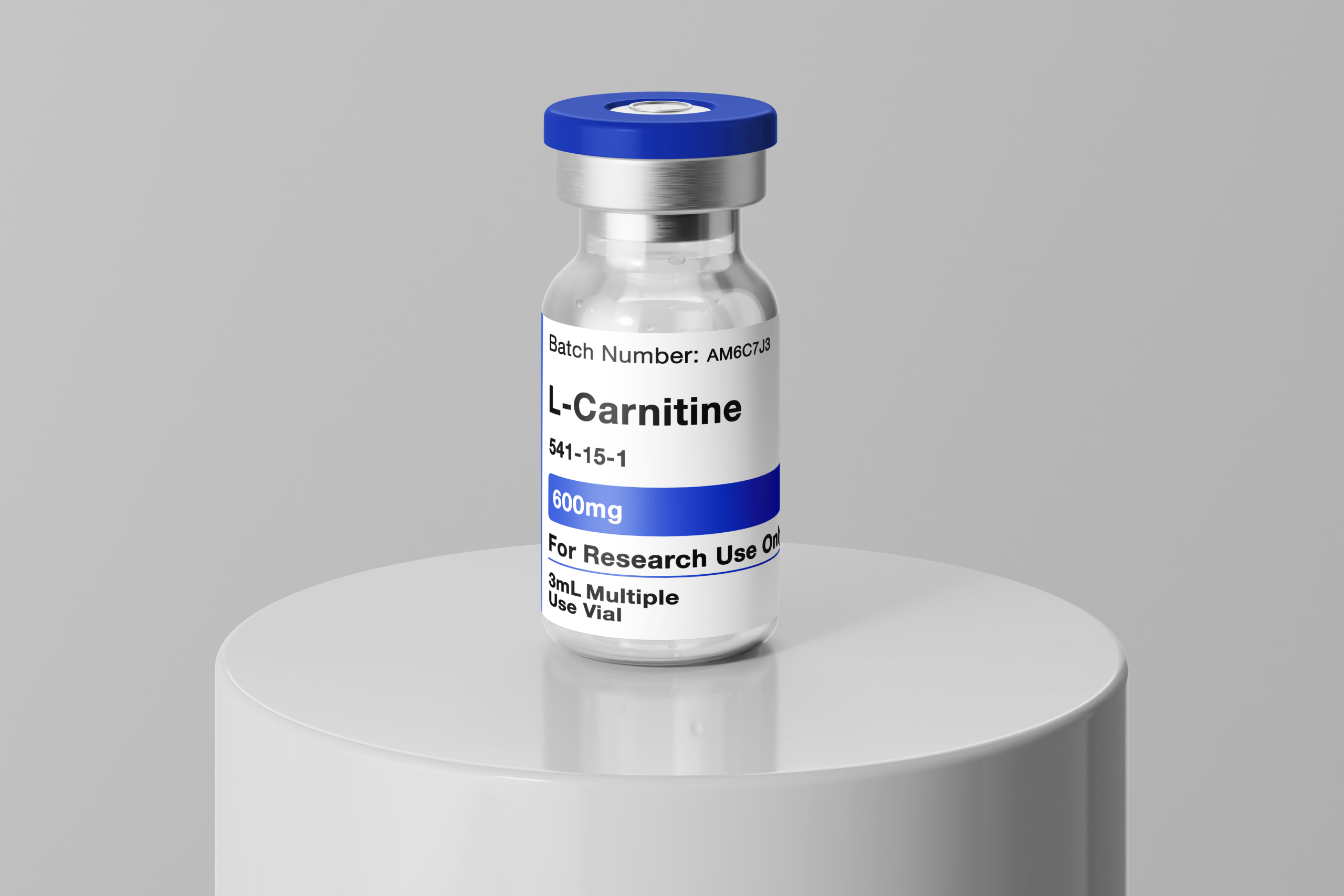
L-Carnitine (levocarnitine) is a naturally occurring quaternary ammonium compound synthesized from lysine and methionine. It plays a key biochemical role in shuttling long-chain fatty acids into the mitochondrial matrix for β-oxidation, thereby contributing to cellular energy production and metabolic regulation.
In research settings, L-Carnitine is used to investigate mitochondrial function, lipid metabolism, energy homeostasis, and redox balance across in vitro and pre-clinical models.
Product Details
- Compound Name: L-Carnitine (levocarnitine)
- Molecular Formula: C₇H₁₅NO₃
- Molecular Weight: ~161.2 g/mol
- Status: Research-grade specification; not approved for therapeutic, diagnostic or veterinary use
- Typical Purity: Research grade materials generally ≥ 98% (verify batch COA)
- CAS Number: 541-15-1
Research Applications
- Mitochondrial & Fatty Acid Transport Studies: Utilized to explore how L-Carnitine mediates transfer of activated long-chain fatty acids into mitochondria via carnitine-palmitoyl transferase systems.
- Metabolic Regulation Models: Used in experimental contexts examining muscle carnitine content, lipid oxidation, endurance capacity and metabolic shifts under supplementation protocols.
- Redox Balance & Nutrient Homeostasis: Supports investigation of intracellular CoA/acyl-CoA status, reactive oxygen species modulation, and energy metabolism dynamics.
Usage & Safety
This material is intended for laboratory research use only. It is not approved for human or veterinary use, nor for dietary, therapeutic, cosmetic or diagnostic applications. Researchers must follow appropriate lab-grade handling, storage conditions, and institutional safety guidelines.
Disclaimer
All information provided is for educational and scientific research purposes only. This material is not intended to diagnose, treat, cure or prevent any disease. Not for human or veterinary consumption.

Reviews
There are no reviews yet.