Description
Overview
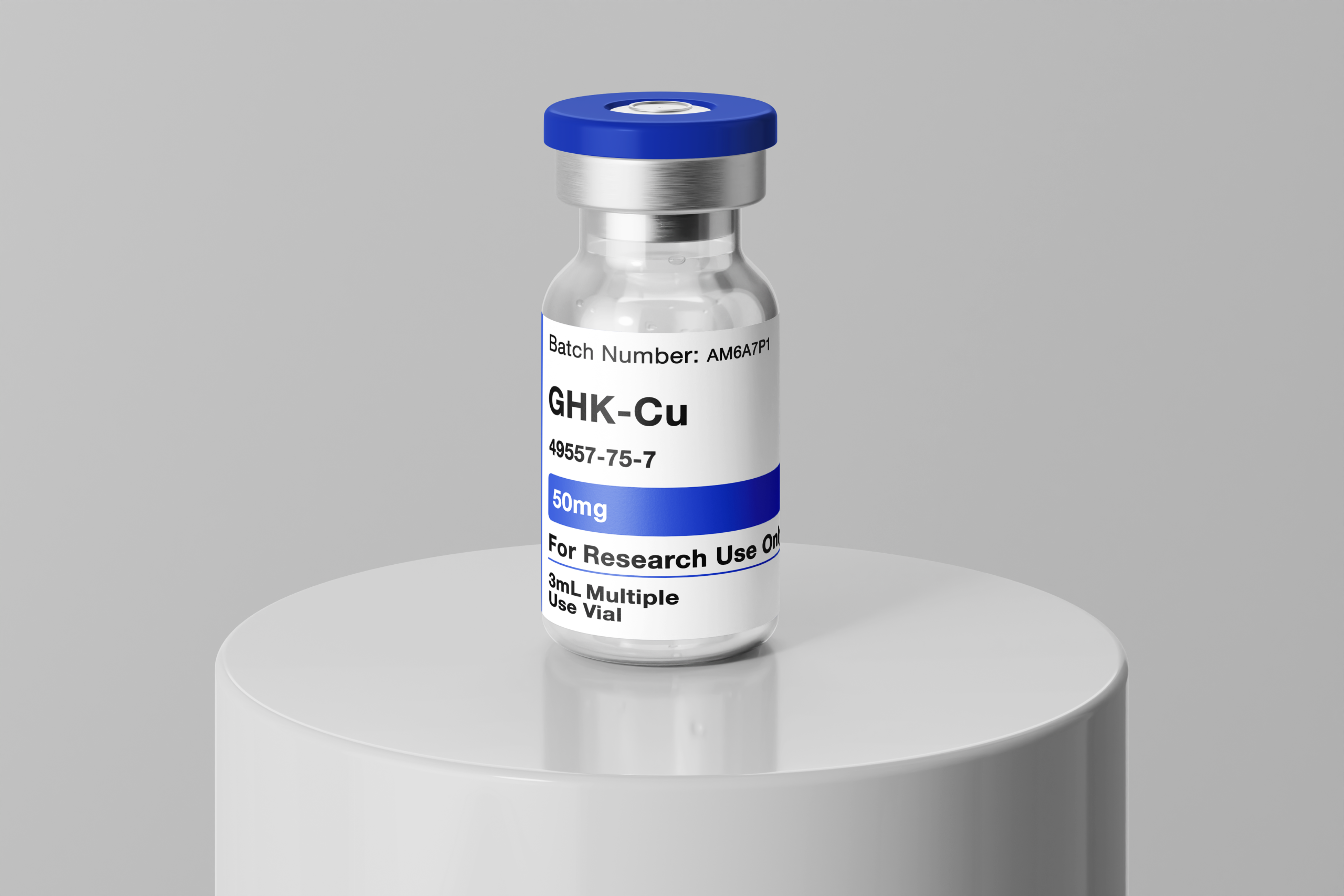
GHK-Cu (glycyl-L-histidyl-L-lysine copper complex) is a small naturally-occurring peptide with high affinity for copper(II) ions. Found in human plasma, saliva and urine, its concentration declines with age. It has been extensively researched for its role as a biological signaling molecule that can modulate gene expression, promote tissue regeneration, stimulate collagen and glycosaminoglycan synthesis, and enhance wound healing processes.
This research peptide is used in experimental settings for studying cellular pathways of regeneration, antioxidant systems, extracellular matrix remodelling, and gene-expression modulation.
Product Details
- Sequence: Gly-His-Lys (when complexed with copper(II) ions)
- Molecular Weight: ~401.91 g/mol (for the peptide-copper complex)
- Regulatory Status: Research-grade only; not approved for human therapeutic use.
- CAS Number: 49557-75-7
Research Applications
- Wound healing & tissue regeneration: GHK-Cu has been shown to accelerate wound closure, increase fibroblast and endothelial cell activity, stimulate angiogenesis, and improve dermal repair in animal and cellular models.
- Skin and extracellular matrix remodelling: Studies reveal GHK-Cu increases collagen and elastin production, enhances skin density and firmness, and supports matrix proteoglycan synthesis in fibroblasts.
- Gene expression modulation & anti-inflammatory / antioxidant effects: GHK-Cu is capable of up- and down-regulating thousands of genes, modulating metalloproteinase/TIMP activity, reducing pro-inflammatory cytokines, and supporting antioxidant enzyme production.
- Research into broader tissue repair mechanisms: It has been examined in models of lung, liver, bone, and gastrointestinal tissue repair and regeneration.

Reviews
There are no reviews yet.